




显示 1-16 个结果(共 19 个结果)




Filter by price
Filter by brands

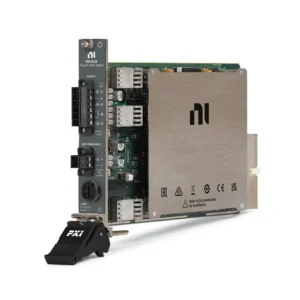
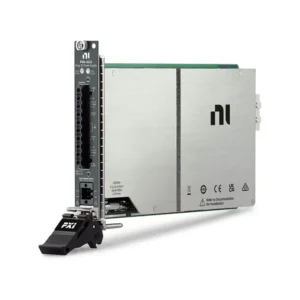

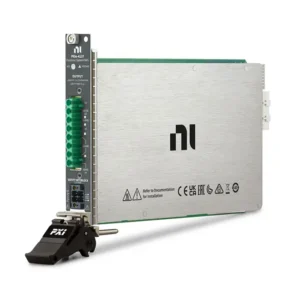


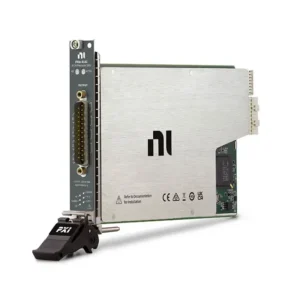
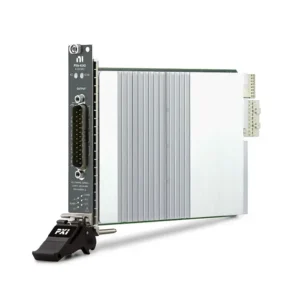


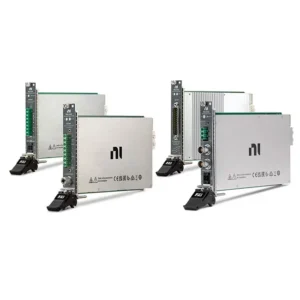
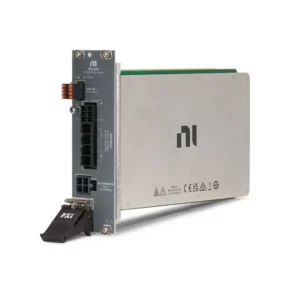
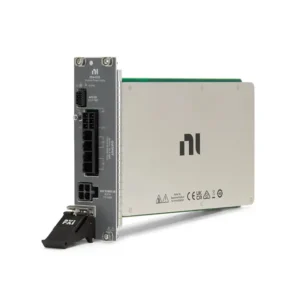
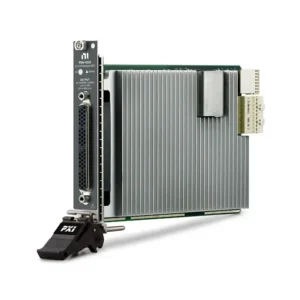


NI PXI Programmable Power Supplies and SMUs
NI PXI Programmable Power Supplies and Source Measure Units provide software-controlled DC power, precision voltage and current sourcing, electrical measurement, current limiting and automated device characterization. They integrate DUT power and parametric measurement with PXI switching, digital, RF and waveform instruments in one synchronized test platform.
The correct instrument depends on more than maximum voltage and current. Engineers must consider channel count, source and sink operation, DC and pulsed power, current sensitivity, compliance limits, measurement speed, remote sensing, guarding, auxiliary power, chassis cooling and DUT connection requirements.
Programmable Power Supply or Source Measure Unit?
A programmable power supply primarily delivers controlled DC power to a device under test. It is well suited to functional testing, voltage-margin testing, multiple DUT power rails, startup analysis and automated power sequencing.
A Source Measure Unit, or SMU, combines precision voltage and current sourcing with precision voltage and current measurement. Many SMUs support four-quadrant operation, allowing them to source or sink current under positive or negative voltage conditions. This makes them more appropriate for semiconductor characterization, leakage measurement and current-voltage sweeps.
Selection Factor
Programmable Power Supply
Source Measure Unit
Primary Function
Provide controlled DUT power
Source and precisely measure voltage or current
Typical Operation
Program voltage with a current limit
Source voltage and measure current, or source current and measure voltage
Current Measurement
Readback and power-consumption monitoring
Precision current measurement across multiple ranges
Source and Sink Capability
Usually source-oriented and model dependent
Four-quadrant operation on applicable models
I-V Sweeps
Not the primary application
Core capability
Low-Current Measurement
Model dependent
Available down to picoampere or femtoampere-class sensitivity on selected models
Typical Applications
DUT power, functional test and rail sequencing
Semiconductor, component and parametric characterization
Maximum voltage and maximum current cannot always be used simultaneously. Every power supply and SMU operates within a defined voltage-current-power envelope. Check the required DUT operating point, continuous duration and pulse conditions against the exact model specifications.
NI PXI Power Supply and SMU Model Comparison
Model
Unique Category
Key Configuration
Best Fit
PXI-4110
Three-Rail Classic PXI Supply
Three outputs including 0 V to 6 V and positive and negative 20 V rails, with current capability up to 1 A
Legacy PXI systems requiring logic and bipolar analog power rails
PXIe-4112
Dual-Channel High-Voltage Supply
Two isolated channels, up to 60 V and 1 A per channel, 120 W total output power
Higher-voltage functional testing and independently controlled DUT rails
PXIe-4113
Dual-Channel High-Current Supply
Two isolated channels, up to 10 V and 6 A per channel, 120 W total output power
Low-voltage electronics requiring higher current
PXIe-4137
200 V Precision System SMU
One channel, ±200 V, ±1 A DC, ±3 A pulsed, up to 40 W DC and 100 fA current sensitivity
High-voltage semiconductor, optoelectronic and component characterization
PXIe-4139
High-Current Pulse System SMU
One channel, ±60 V, ±3 A DC, ±10 A pulsed, up to 40 W DC and 100 fA current sensitivity
PMIC, RFIC, LED and power-device characterization
PXIe-4140
General-Purpose 10 V Four-Channel SMU
Four channels, ±10 V, 100 mA, four-quadrant operation and 100 pA current sensitivity
Multi-terminal devices and moderate-precision automated measurements
PXIe-4141
Precision 10 V Four-Channel SMU
Four channels, ±10 V, 100 mA, 10 pA sensitivity and SourceAdapt transient-response control
Low-current, multi-pin semiconductor characterization
PXIe-4142
General-Purpose 24 V Four-Channel SMU
Four channels, ±24 V, 150 mA, 3.6 W per channel and 100 pA sensitivity
Multi-rail IC and component testing requiring wider voltage range
PXIe-4143
Precision 24 V Four-Channel SMU
Four channels, ±24 V, 150 mA, 10 pA sensitivity and SourceAdapt
Precision multi-terminal semiconductor and sensor characterization
PXIe-4144
Low-Voltage High-Current Four-Channel SMU
Four channels, ±6 V, 500 mA and up to 3 W source or sink power per channel
Low-voltage IC rails and devices needing more current per channel
PXIe-4147
High-Current Precision Four-Channel SMU
Four channels, ±8 V, ±3 A, up to 24 W per channel, 100 fA sensitivity and SourceAdapt
High-current PMIC and semiconductor production testing
PXIe-4150
60 V 300 W PXI Power Supply
One channel, up to 60 V, 10 A and 300 W with high-speed voltage and current measurement
Higher-voltage boards, converters and electronic assemblies
PXIe-4151
25 A 300 W PXI Power Supply
One channel, up to 20 V, 25 A and 300 W with remote sensing and integrated measurement
Low-voltage, high-current DUT and PMIC power testing
PXIe-4162
Guarded 12-Channel Precision SMU
Twelve identical ±24 V SMU channels with remote sensing, guarding and SourceAdapt
Precision mixed-signal IC and multi-site production test
PXIe-4163
24-Channel High-Density Precision SMU
Twenty-four identical ±24 V SMU channels with four-quadrant operation and SourceAdapt
High-pin-count ICs and systems requiring maximum SMU channel density
PXIe-4190
LCR Meter with Integrated SMU
Up to 2 MHz LCR stimulus, up to ±40 V DC bias and femtoampere-class SMU measurement on selected configuration
Capacitance-voltage, impedance and semiconductor parametric testing
RMX-4101
Compact 216 W Rack Power Supply
Single-channel 2U rack supply with configurations up to 216 W, 100 V or 10 A
Compact rack systems needing moderate programmable DC power
RMX-4102
Compact 432 W Rack Power Supply
Single-channel 2U rack supply with configurations up to 432 W, 100 V or 20 A
Higher-power rack-mounted functional test systems
RMX-4123
High-Voltage 750 W Rack Power Supply
One channel, 0 V to 650 V, up to 3.5 A and 750 W in a 1U full-width enclosure
High-voltage component, insulation and power-electronics testing
The RMX-4101, RMX-4102 and RMX-4123 are standalone or rack-mounted power supplies rather than PXI plug-in modules. The PXIe-4190 is primarily an LCR meter with integrated SMU capability. Confirm the required form factor before including these instruments in a PXI system quotation.
How to Select a PXI Programmable Power Supply or SMU
1. Define the DUT Voltage Range
Record the minimum and maximum voltage required for normal operation, margin testing, startup, shutdown and fault simulation. Include any negative-bias requirement. A unipolar programmable power supply cannot replace a bipolar four-quadrant SMU when both voltage polarities are required.
Do not automatically select the highest available voltage. A lower-voltage instrument may provide greater current, better channel density or more suitable measurement ranges.
2. Determine Continuous and Pulsed Current
Specify continuous current separately from short-duration peak current. Wireless transmitters, processors, PMICs, LEDs and other devices can draw brief current pulses substantially higher than their steady-state consumption.
For pulsed operation, identify pulse amplitude, duration, repetition rate, duty cycle and acceptable voltage droop. Verify the complete pulsed operating envelope rather than relying only on a headline peak-current value.
3. Check the Complete Power Envelope
Voltage, current and power limits must be evaluated together. For example, the PXIe-4150 supports up to 60 V and 10 A but has a maximum output power of 300 W, so it cannot supply 60 V at 10 A simultaneously.
Plot demanding DUT operating points against the model’s quadrant or power-envelope diagram. This is particularly important for power converters, PMICs, LEDs, active devices and loads whose current changes significantly during testing.
4. Determine Whether the Instrument Must Sink Current
A conventional single-quadrant power supply normally delivers power to the DUT. Four-quadrant SMUs can source or absorb current within their specified operating envelopes.
Controlled sinking may be required when testing active circuits, charged capacitive devices, bidirectional power stages or source-like DUTs. High-power discharge testing may require a dedicated electronic load rather than a precision SMU.
5. Specify the Required Measurement Sensitivity
Maximum current does not describe the complete measurement requirement. Semiconductor test can involve amperes during active operation and picoamperes or femtoamperes during leakage measurements.
Document the smallest current that must be measured, required accuracy, acceptable noise, measurement time and expected DUT capacitance. Selectable current ranges, aperture time, settling time and environmental leakage can all affect the usable result.
6. Calculate the Required Channel Count
Count every DUT supply rail, bias terminal and independent source-measure connection. Then include the number of DUTs that will be tested simultaneously.
A single-channel system SMU may provide the best performance for one demanding terminal. Four-, 12- or 24-channel SMUs can provide better density for high-pin-count devices and parallel semiconductor production testing.
7. Confirm Remote Sense and Guarding
Remote sensing uses separate force and sense conductors to compensate for voltage drop in cables, switches and fixtures. It is particularly important in high-current applications and whenever the voltage must be controlled accurately at the DUT terminals.
Guarding helps reduce leakage through cables, connectors and fixtures during very-low-current measurements. A precision SMU cannot deliver femtoampere-class system performance if the fixture, switching or contamination introduces substantially greater leakage.
8. Evaluate Speed, Sequencing and Synchronization
Measurement speed affects production throughput and transient capture. Selected PXI power instruments can acquire voltage and current at high rates, perform hardware-timed source sequences and coordinate operations through PXI trigger lines.
Define whether the application needs static DC readings, fast rail sequencing, I-V sweeps, startup-current capture or synchronization with digital, RF or waveform instruments.
Four-Quadrant SMU Operation
Quadrant
Voltage
Current
Instrument Behavior
I
Positive
Positive
Sources power under positive bias
II
Positive
Negative
Sinks power under positive bias
III
Negative
Negative
Sources power under negative bias
IV
Negative
Positive
Sinks power under negative bias
Four-quadrant capability supports positive and negative device bias, controlled sourcing and sinking, and characterization across a wider I-V region. The permitted voltage, current and power are still limited by the exact model’s quadrant diagram.
Precision I-V and Leakage Measurements
An SMU can source a series of voltage values and measure the resulting current, or source current and measure voltage. The resulting I-V curve can identify forward voltage, threshold behavior, resistance, breakdown behavior, leakage and other electrical characteristics.
Common devices include:
Diodes, LEDs and laser diodes
MOSFETs and bipolar transistors
Power-management integrated circuits
RF and mixed-signal integrated circuits
MEMS devices and semiconductor sensors
Optical transceivers and optoelectronic components
Passive devices requiring DC-bias characterization
For low-current measurements, use suitable triaxial or low-leakage cabling where required, keep connectors clean and dry, control fixture leakage and allow sufficient settling time. Switching modules must also support the required leakage, isolation, guarding and four-wire topology.
PXI Power Sequencing and Transient Testing
Modern DUTs often contain several rails that must be enabled and disabled in a defined order. A PXI power system can coordinate rail sequencing with digital inputs, oscilloscopes, waveform generators and switching modules.
A typical automated power-up test may:
Configure voltage levels and compliance limits.
Enable the primary DUT supply.
Enable secondary bias and logic rails after defined delays.
Capture startup voltage and current waveforms.
Run functional or parametric measurements.
Disable the rails in the specified shutdown order.
Selected instruments provide programmable transient-response control through NI SourceAdapt technology. This helps balance settling time, overshoot and stability for capacitive loads, long cables and complex test fixtures.
Auxiliary Power, Cooling and PXI Compatibility
High-power PXI modules can require more input power and cooling than ordinary measurement cards. The PXIe-4112 and PXIe-4113 are available in configurations with or without their auxiliary power source, while the PXIe-4150 and PXIe-4151 require compatible APS-415x auxiliary power hardware.
Before ordering, verify:
Classic PXI, PXI Hybrid or PXI Express slot compatibility
Number of adjacent slots required by the module
Chassis cooling capacity per slot
Required auxiliary power model and power cable
Total power consumption of all installed modules
Ambient-temperature and airflow requirements
Output connector, force/sense cable and fixture compatibility
Select a compatible PXI or PXIe chassis by slot type, power and cooling—not only by the number of available slots.
Software and Test-System Integration
NI PXI programmable power supplies, SMUs and the PXIe-4190 use NI-DCPower for supported instrument configuration and automation. Depending on the model, NI-DCPower can control voltage, current, compliance limits, measurement ranges, source sequences, triggers and output-disconnect states.
InstrumentStudio provides interactive instrument panels for initial setup and troubleshooting. LabVIEW, Python, C/C++, C# and other supported environments can be used for custom automation, while TestStand can coordinate complete production-test sequences.
A complete automated system may combine the power instrument with:
PXI switches for routing instruments to multiple terminals or DUT sites
Digital pattern instruments for semiconductor functional testing
PXI oscilloscopes and digitizers for transient waveform acquisition
PXI signal generators for device stimulus
RF instruments for RFIC and wireless-device testing
Digital multimeters for additional precision measurements
Typical Applications
Semiconductor wafer and packaged-device characterization
PMIC active, standby, shutdown and leakage-current testing
Multi-site semiconductor production test
PCB assembly and electronic product functional testing
Automated voltage-margin and power-sequencing tests
LED, laser-diode and optical-transceiver characterization
Sensor and MEMS electrical testing
Automotive electronic control-unit validation
Aerospace and defense electronics testing
Power-converter and power-management circuit evaluation
Capacitance-voltage and impedance measurement
Laboratory research and automated component characterization
Legacy PXI Power Instrument Replacement
Replacing an older PXI power supply or SMU requires more than matching its maximum voltage and current. Differences in connector type, channel isolation, compliance behavior, transient response, measurement sensitivity and software can require fixture or test-program changes.
Compare the following before approving a replacement:
PXI or PXI Express bus and slot compatibility
Number of channels and channel isolation
Voltage, current and source-power envelope
Sink power and quadrant support
Continuous and pulsed-current capability
Minimum current range and measurement sensitivity
Remote-sense and guard connections
Output connector and cable pinout
Auxiliary power and cooling requirements
NI-DCPower and operating-system support
Sequencing, triggering and application-code behavior
Calibration and production requalification requirements
PXI Power Supply and SMU Procurement Guide
Provide the following information for accurate model selection and quotation:
Required model and part number, if already selected
Programmable power supply, SMU or LCR measurement requirement
Number of independent channels
Minimum and maximum voltage
Continuous current and maximum source power
Pulse current, pulse duration and duty cycle
Required sink current or sink power
Smallest current that must be measured
Required measurement accuracy and speed
Remote-sense, four-wire and guarding requirements
Existing PXI chassis and controller models
Required auxiliary power, cables and connector accessories
Switching and multi-site test requirements
Operating system and NI-DCPower version
Calibration documentation requirements
Required quantity, condition, destination and delivery date
Part numbers within one model family can represent different performance, included auxiliary power or current-sensitivity configurations. Quotations should therefore identify both the model and complete NI part number whenever possible.
FAQ
What is the main difference between a PXI power supply and an SMU?
A programmable power supply is primarily intended to power the DUT. An SMU is designed to source voltage or current while precisely measuring the corresponding current or voltage. SMUs are generally the better choice for I-V sweeps, leakage measurements and semiconductor parametric testing.
Can every PXI SMU sink power?
No. Source and sink capability depends on the exact instrument and its operating envelope. Verify four-quadrant operation, maximum sink power and the permitted voltage-current combinations before selection.
Which model is suitable for high-voltage precision measurements?
The PXIe-4137 supports a voltage range up to ±200 V and is intended for precision system-SMU applications. If the primary need is high-voltage power rather than precision SMU measurement, the rack-mounted RMX-4123 supports up to 650 V and 750 W.
Which model provides the highest SMU channel density?
The PXIe-4163 provides 24 precision SMU channels. The PXIe-4162 provides 12 channels and adds guarded connections for applications in which low-current leakage control is particularly important.
What is the difference between PXIe-4142 and PXIe-4143?
Both provide four ±24 V, 150 mA SMU channels. The PXIe-4143 is the precision version, offering greater current sensitivity and SourceAdapt transient-response control.
What is the difference between PXIe-4150 and PXIe-4151?
Both are single-channel 300 W programmable power supplies. The PXIe-4150 supports up to 60 V and 10 A, while the PXIe-4151 supports up to 20 V and 25 A. Select according to the DUT voltage-current operating point.
Is the PXIe-4190 a conventional SMU?
No. It is primarily an LCR meter with integrated precision SMU functionality. It is intended for impedance, capacitance-voltage, current-voltage and related semiconductor parametric measurements.
Are RMX power supplies installed in a PXI chassis?
No. RMX models are standalone or rack-mounted instruments. They can operate as part of a PXI-based automated test system but do not occupy PXI peripheral slots.
Why is remote sensing important?
Force-cable and fixture resistance creates voltage drop when current flows. Remote sensing measures voltage at the DUT and allows the instrument to compensate for this loss, improving voltage accuracy at the device terminals.
Recommended NI PXI Power Instruments
Consider the PXIe-4113 for two low-voltage, higher-current power channels; the PXIe-4139 for high-performance single-channel semiconductor characterization; the PXIe-4147 for four high-current precision SMU channels; the PXIe-4150 for 300 W power delivery up to 60 V; or the PXIe-4163 for high-density 24-channel source-measure testing.
Related NI PXI Solutions
Browse additional PXI and PXIe modules for switching, waveform generation, digital test, RF measurement and data acquisition. Complete systems also require a compatible PXI controller, chassis, cables and DUT interface selected for the required software, power and cooling configuration.
NI PXI Programmable Power Supplies and SMUs from PXISOURCE
PXISOURCE supports engineers, system integrators and procurement teams with model selection, part-number verification, chassis compatibility review, auxiliary-power matching, connectivity planning and legacy instrument replacement. Send the DUT voltage-current envelope, channel count, minimum measurable current, pulse requirements and existing PXI configuration for a technically matched quotation.
Need help selecting an NI PXI power supply or SMU? Email [email protected] or contact PXISOURCE on WhatsApp.