




Показаны все (11)




Filter by price
Filter by brands






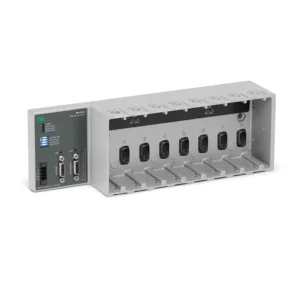


NI CompactRIO Chassis
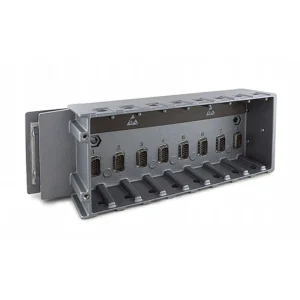
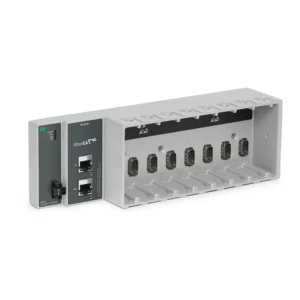
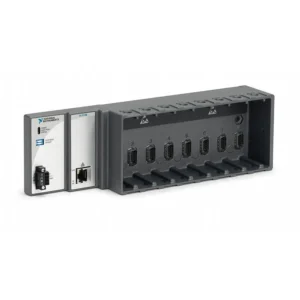
NI CompactRIO Chassis provide modular C Series I/O capacity, FPGA-based timing and expansion resources for embedded measurement and control systems. They are used when a CompactRIO controller or host system requires additional sensor, digital, analog or communication I/O near the machine, test cell or distributed measurement location.
CompactRIO chassis are available in legacy reconfigurable, Ethernet RIO and high-performance expansion architectures. The correct selection depends on the required controller or host connection, C Series module configuration, FPGA requirements, synchronization method, environmental conditions and deployed software.
What Is a CompactRIO Chassis?
A CompactRIO chassis is a modular I/O platform that accepts compatible NI C Series modules. Depending on the model, it can provide an FPGA, timing resources, network communication or a dedicated expansion interface for connection to an external CompactRIO controller or host computer.
Unlike an integrated CompactRIO controller, a CompactRIO chassis is primarily used to add modular I/O capacity. It should not be assumed to provide the same local processor, operating system or standalone application capability as a controller.
CompactRIO chassis are not interchangeable solely because they accept C Series modules. Their controller connection, FPGA target, slot count, communication architecture, power requirements and software support can differ substantially. Confirm the complete system architecture before ordering.
CompactRIO Chassis Architectures
Chassis Architecture
Primary Connection Method
Best Fit
Key Consideration
Legacy Reconfigurable Chassis
Model-specific CompactRIO or host interface
Maintaining validated legacy CompactRIO systems and established FPGA applications
Verify FPGA target, driver support, deployed bitfile and controller compatibility
Ethernet RIO Chassis
Ethernet network connection
Distributed I/O installed near machinery, fixtures, sensors or remote test locations
Network topology, controller support, timing and deployment configuration must be validated
MXI or High-Performance RIO Expansion Chassis
Dedicated high-speed RIO expansion interface
Systems requiring high-throughput FPGA-based expansion and close controller integration
Requires a compatible host or CompactRIO controller interface and supported cable hardware
Integrated FPGA Expansion Chassis
Model-specific network or expansion interface
Custom timing, distributed processing and deterministic C Series I/O expansion
FPGA resources and I/O routing vary by model and may require application recompilation
CompactRIO Chassis Families
Model Family
Unique Category
Key Differentiator
Best For
cRIO-911x Series
Legacy Reconfigurable CompactRIO Chassis
Established FPGA-based C Series I/O chassis architecture
Maintaining legacy embedded measurement, control and test platforms
NI 914x Series
Ethernet CompactRIO Expansion Chassis
Networked CompactRIO I/O expansion for distributed systems
Remote C Series I/O, industrial monitoring and networked test installations
NI 9149
8-Slot Ethernet FPGA CompactRIO Chassis
Eight C Series slots with Zynq-7020 FPGA-based Ethernet RIO architecture
Distributed FPGA-based I/O systems requiring higher modular density
cRIO-915x Series
High-Performance Reconfigurable I/O Chassis
FPGA-based CompactRIO expansion platform for compatible controller or host architectures
High-performance embedded I/O expansion and custom FPGA applications
Model families include multiple FPGA, slot-count, interface and lifecycle variations. Verify the exact model, part number, installed options and required software before selecting a new chassis or replacing existing hardware.
CompactRIO Chassis and Controller Relationship
A CompactRIO chassis expands the I/O capacity of a larger system. The connected controller or host provides the application-level processing, while the chassis provides C Series module slots and model-specific timing or FPGA resources.
The complete architecture must define how data, clocks, triggers and FPGA logic are shared between the controller and the chassis. The connection method is a system design decision, not only a cable-selection decision.
System Component
Primary Role
Selection Risk
CompactRIO Controller or Host
Runs the deployed application, real-time logic, communications and system-level processing
Controller interface or software does not support the selected expansion chassis
CompactRIO Chassis
Provides C Series I/O slots, FPGA resources and distributed expansion capability
Chassis architecture does not match the required controller or host connection
C Series Modules
Provide sensor, analog, digital and communication interfaces
Module support, timing or power requirements are not compatible with the complete system
Expansion Cable or Network
Transfers data, configuration and timing information between system components
Wrong cable, unsupported switch topology or unverified network configuration
Software and FPGA Bitfile
Configures the system and implements real-time or FPGA behavior
Existing application or bitfile is not compatible with the replacement target
How to Choose a CompactRIO Chassis
1. Identify the Required Expansion Architecture
Begin with the existing controller or host hardware. Determine whether the chassis must connect through Ethernet, a dedicated RIO expansion interface or another supported CompactRIO architecture. Do not select a chassis before confirming how it will communicate with the rest of the system.
For replacement projects, record the existing chassis model, controller model, cable assembly, network topology, LabVIEW project and FPGA target before proposing a substitute.
2. Define the C Series Module Configuration
Select the required NI C Series modules according to the electrical interface of the sensors and devices under test. Common requirements include analog voltage, current, thermocouples, RTDs, strain, IEPE vibration sensors, digital I/O, counters and industrial communication.
Confirm slot count, module support, signal conditioning, isolation, sample timing and terminal accessories. A C Series module may be physically similar to another module while requiring different excitation, connectors or driver support.
3. Determine FPGA Requirements
Use the chassis FPGA for functions requiring deterministic hardware-level behavior, such as custom triggering, encoder processing, pulse generation, inline filtering, fast protection logic, protocol implementation and synchronized I/O.
FPGA resource availability depends on the exact chassis model. Existing FPGA code may require recompilation or redesign when changing the chassis, even if the C Series module layout remains the same.
4. Plan Timing and Synchronization
Specify whether the remote I/O must share a sample clock, reference clock, start trigger or timestamp with the controller, other chassis or external equipment. This is especially important for motion, power, vibration, control and closed-loop applications.
Ethernet connectivity by itself does not guarantee deterministic synchronization. Confirm the supported timing architecture, cable routing, network configuration and software implementation for the exact hardware combination.
5. Review Data Throughput and Latency
Calculate the generated data rate from the active channel count, sample rate and transferred data format:
Data rate = active channels × sample rate × transferred bytes per sample.
Include network or expansion-bus overhead, FPGA buffering, controller processing, logging and other simultaneous system traffic. Continuous dynamic acquisition and closed-loop control should be validated with the intended application and test duration.
6. Confirm Deployment Conditions
CompactRIO chassis are commonly installed in machinery, test cells, vehicles, cabinets and laboratory fixtures. Confirm power input, operating temperature, cooling, mounting, shock and vibration conditions, cable strain relief and field-wiring practices before installation.
Software, FPGA and Compatibility Considerations
CompactRIO chassis are configured through compatible NI software, commonly including NI-RIO, LabVIEW, LabVIEW Real-Time and LabVIEW FPGA. The exact supported software depends on the chassis, connected controller, operating system and C Series modules.
Before deployment or replacement, verify:
Exact chassis model, revision and part number
Connected CompactRIO controller or host model
Required cable, remote interface or Ethernet topology
Installed C Series modules and slot assignments
LabVIEW, NI-RIO, LabVIEW Real-Time and LabVIEW FPGA versions
Existing FPGA target, bitfile and required compilation process
Clock, trigger, synchronization and latency requirements
Controller storage, data logging and network-transfer requirements
Power, temperature, mounting and field-wiring conditions
Typical CompactRIO Chassis Applications
Distributed industrial I/O and machine monitoring
Remote sensor acquisition in test cells and facilities
Hardware-in-the-loop simulation systems
Automotive, aerospace and transportation validation
Power electronics, motor and inverter testing
Custom FPGA timing and protocol development
Structural, strain, force and vibration monitoring
Energy, battery and renewable-energy control systems
Robotics, motion coordination and mechatronics
CAN, LIN and industrial communication integration
Legacy CompactRIO expansion and maintenance projects
CompactRIO Chassis vs CompactRIO Controller
A CompactRIO controller combines embedded processing, real-time software support, FPGA capability and C Series I/O slots in one device. A CompactRIO chassis is normally used to provide additional or distributed C Series I/O capacity under the control of a compatible controller or host system.
Choose an integrated CompactRIO controller when the system requires a self-contained embedded control platform. Choose a CompactRIO chassis when the design requires remote I/O expansion, dedicated FPGA chassis resources or compatibility with an existing CompactRIO architecture.
Legacy CompactRIO Chassis Replacement
Replacing a legacy CompactRIO chassis requires more than matching the number of C Series slots. The replacement may use a different FPGA family, remote interface, power requirement, synchronization method, driver version or deployed software architecture.
Compare the following before approving a replacement:
Controller-to-chassis connection architecture
FPGA target, resources and compiled bitfile
C Series module support and I/O mapping
Clock, trigger and synchronization behavior
Network topology, switches and IP configuration
NI-RIO and LabVIEW software compatibility
Power connectors, field wiring and mounting arrangement
Environmental rating and operating temperature requirements
System requalification and safety documentation
Production or safety-related systems should be revalidated with the complete controller, chassis, module and application configuration. Physical compatibility does not guarantee software or FPGA compatibility.
CompactRIO Chassis Procurement and RFQ Guide
Provide the following information for accurate chassis selection and quotation:
Existing chassis model and complete part number, if replacing hardware
Connected CompactRIO controller or host model
Required C Series module models and quantities
Required slot count and future expansion capacity
Ethernet, RIO expansion or other required connection method
FPGA application, bitfile or custom timing requirements
Required sample rates, control-loop rate and synchronization method
LabVIEW, NI-RIO, LabVIEW Real-Time and LabVIEW FPGA versions
Network topology, cable length and remote installation location
Power, mounting, temperature and environmental requirements
Required terminal blocks, cables and field-wiring accessories
New or pre-owned hardware preference
Required quantity, delivery date and destination
FAQ
Does a CompactRIO chassis include an embedded controller?
Not necessarily. A CompactRIO chassis is generally used as modular I/O expansion and may require a compatible CompactRIO controller or host system. Verify the exact model architecture before assuming that it can run an application independently.
Can a CompactRIO chassis use C Series modules?
Yes. CompactRIO chassis accept compatible NI C Series modules for analog, digital, sensor and communication I/O. Confirm support for the exact chassis, connected controller and software version.
Can an Ethernet CompactRIO chassis operate through any network switch?
Not automatically. The switch, network topology, traffic load, security configuration and required timing behavior must be compatible with the complete CompactRIO application. Validate the intended network before deployment.
Do I need to recompile an FPGA bitfile when changing chassis?
Usually, yes, if the replacement uses a different FPGA target or architecture. Review FPGA resource use, target compatibility and I/O mapping before moving an existing application to another chassis.
Can a CompactRIO chassis replace a CompactDAQ chassis?
Only when the complete system architecture supports it. CompactRIO chassis are intended for FPGA-based and embedded control architectures, while CompactDAQ chassis are primarily used for PC- or network-based modular data acquisition.
How do I choose between a CompactRIO chassis and an integrated CompactRIO controller?
Choose an integrated controller for a self-contained embedded real-time and FPGA system. Choose a chassis when the requirement is expansion I/O, remote placement or compatibility with an existing controller and FPGA architecture.
Related NI CompactRIO Solutions
Pair a CompactRIO chassis with a compatible CompactRIO controller and the required NI C Series modules. Review the complete CompactRIO system range for controllers, chassis and modular I/O solutions.
NI CompactRIO Chassis from PXISOURCE
PXISOURCE supports engineers, system integrators and procurement teams with CompactRIO chassis selection, controller compatibility review, C Series module matching, FPGA migration checks and legacy-system replacement. Send the existing controller and chassis models, I/O list, timing requirements, software environment and preferred hardware condition for a technically matched quotation.
Need help selecting the right NI CompactRIO chassis? Email [email protected] or contact PXISOURCE on WhatsApp.